
It's Hot Out This Week
Please check on each other

Extreme Heat
A heat wave is not only an outdoor problem.
That’s one of the most important things for people to understand this week. I’ll be first to admit that when I think about extreme heat, I think about the people working outside, playing sports, attending events, or even just walking long distances. But dangerous heat can also build inside homes, apartments, cars, workplaces, and places before people may realize how quickly their bodies are losing the ability to cool down.
With widespread heat and humidity affecting much of the country, this is a week to treat heat preparedness as a shared responsibility.
Check on the people around you. Make sure air conditioning is working. Know who may need a ride to a cooling center. Pay attention to children, older adults, outdoor workers, people with chronic medical conditions, people who live alone, and anyone who may not ask for help until the situation is already serious.
Heat illness can move faster than you’d expect.
Do Not Rely on Temperature Alone
The number on the weather app does not tell the whole story.
Humidity matters because the body cools itself by sweating. When the air is humid, sweat does not evaporate as well, and the body has a harder time releasing heat. That’s why a 90-degree day with high humidity can be more dangerous than you’d expect.
Pay attention to the heat index, which is the “feels like” temperature. Also watch tools like the National Weather Service HeatRisk map, which helps show when heat may become dangerous for health, especially for people who are more sensitive to heat.
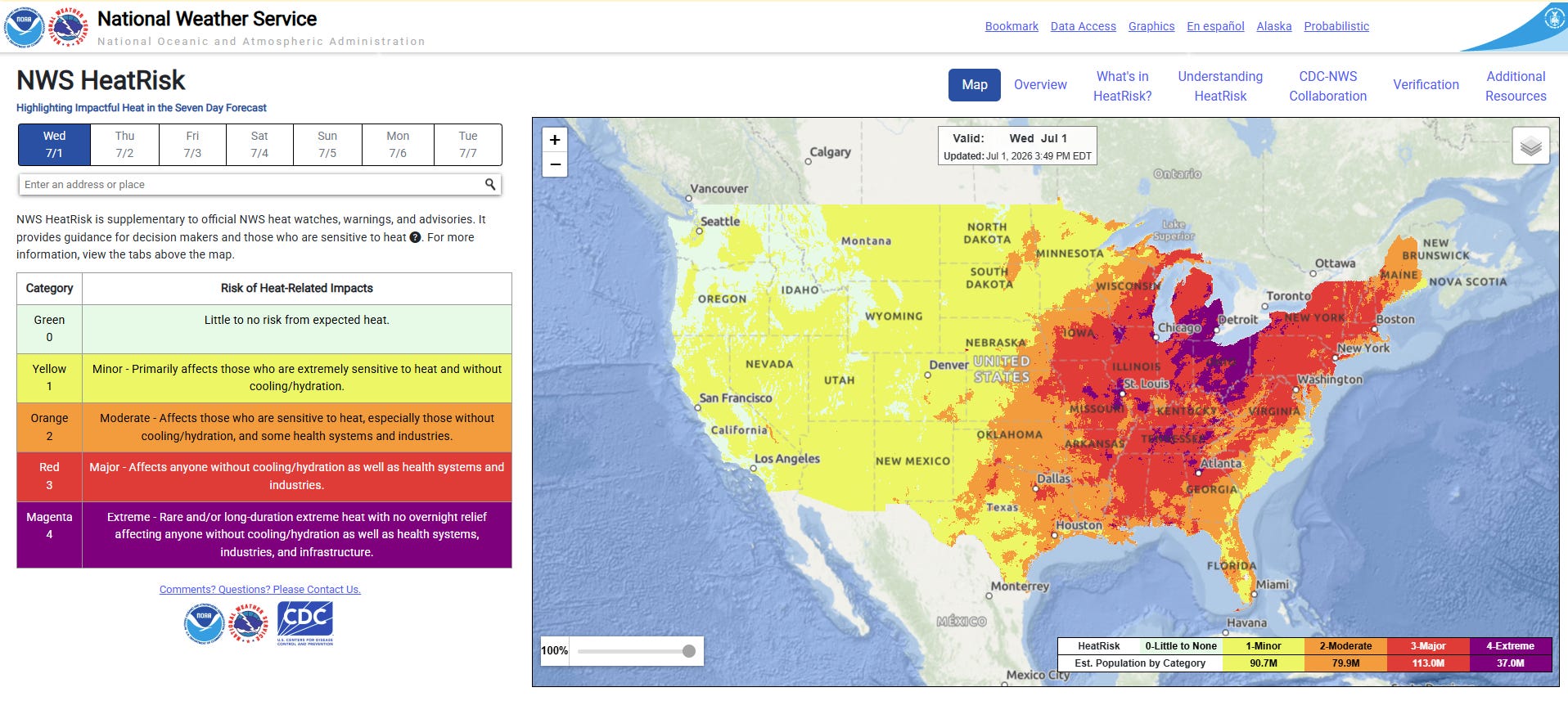
For everyone, the question should be simple:
Do I, my family/the people I live with, my neighborhood, congregation, school, workplace, apartment building, or community group have a safe way to cool down?
Know Who Is at Higher Risk
Heat risk isn’t the same for everyone.
Older adults are at higher risk because the body becomes less able to regulate temperature with age. Some medications can affect thirst, sweating, circulation, or awareness of overheating. People with heart disease, diabetes, respiratory conditions, mobility limitations, or certain mental health conditions may face additional risk.
Children are also vulnerable, especially during outdoor sports, camps, playground time, and travel. Kids with asthma may have more trouble when heat and poor air quality overlap.
Pregnant people, outdoor workers, people without stable housing, and people living in homes without reliable air conditioning also need extra attention.
Heat preparedness should be specific, depending on the circumstances.
A text message may be enough for one person. Someone else may need a phone call. Someone else may need a ride. Someone else may need someone to physically knock on the door and make sure the house is cooling.
Check the Cooling, Not Just the Person
When you check on someone, don’t just ask, “Are you okay?”
Ask practical questions.
Is the air conditioning working?
Is the room actually cool?
Are you drinking water?
Do you have medications that need to stay cool?
Do you have a way to get to a cooling center, library, mall, senior center, or other air-conditioned place?
Do you know who to call if the power goes out?
Do you have pets that also need protection from the heat?
A home can look safe from the outside and still become dangerous inside. Indoor heat can build over several days, especially when overnight temperatures stay high. If the house never cools down, the body doesn’t get a chance to recover.
Fans Are Not Always Enough
Fans can help in some conditions, but they’re not a substitute for air conditioning during dangerous heat.
A fan can help sweat evaporate, which may cool the body. But when indoor temperatures get too high, a fan may not provide enough protection. In some conditions, it can simply move hot air around.
If someone is relying only on a fan and the room is still hot, it’s time to look for a cooler place meaning a cooling center, library, community center, mall, neighbor’s house, or another public building with air conditioning.
Community leaders can help by making sure people know where those places are, when they’re open, whether transportation is available, and whether pets are allowed.
Drink Before You Feel Thirsty
Thirst is a late warning sign.
People can become dehydrated before they feel thirsty, and older adults may feel thirst even later. Encourage regular water breaks, especially for children, older adults, outdoor workers, athletes, and anyone spending time outside.
Water is usually enough for normal daily activity. People who are sweating heavily for long periods may also need electrolytes.
Alcohol works against hydration. Caffeine in moderate amounts is usually less of a concern than many people assume, but water still needs to be part of the plan.
The practical goal is not complicated: drink before the body is already behind.
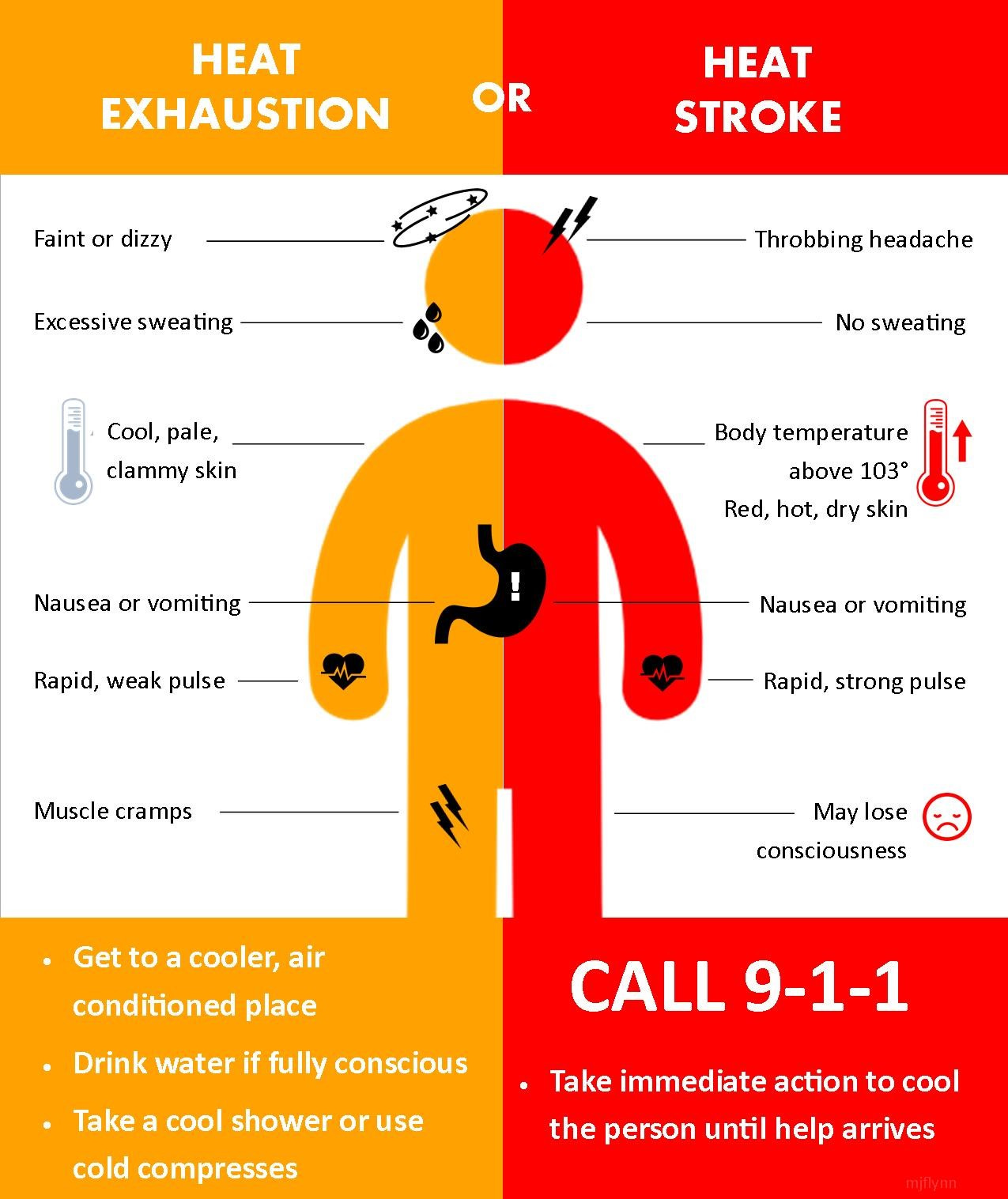
The Difference Between Heat Exhaustion and Heat Stroke
Heat exhaustion is serious and needs quick action.
Signs can include heavy sweating, weakness, dizziness, nausea, headache, and a fast pulse. Move the person to a cooler place, loosen clothing, use cool cloths, and provide water if they are awake and able to drink.
Heat stroke is a medical emergency.
Call 911 if someone is confused, passes out, has a very high body temperature, stops sweating or has hot skin, or seems seriously ill after heat exposure. Start cooling them immediately while help is on the way.
This is especially important in rural areas, at outdoor events, on job sites, at sports practices, and in homes where someone may be alone.
What Families Can Do Today
Make a quick heat plan before the hottest part of the day.
Identify the coolest room in the home. Check that air conditioning is working. Charge phones. Freeze water bottles if helpful. Move outdoor activity to early morning or evening. Check medication storage instructions. Never leave children, adults, or pets in cars. Know where the nearest cooling location is.
Then take inventory of the people you know.
Neighbors who live alone. Older relatives. Friends with young children. Anyone recovering from illness. Anyone whose home may not cool well. Anyone who may not want to be a bother.
A short check-in can make a difference.
What Community Leaders Can Do This Week
If you help lead a church, neighborhood group, school, sports team, nonprofit, workplace, senior program, apartment community, or local volunteer group, heat safety is part of your role this week.
Share clear information about local cooling centers.
Cancel or move outdoor activities when conditions are dangerous.
Build check-in lists for older adults and people who live alone.
Make sure staff and volunteers know the signs of heat illness.
Coordinate rides where possible.
Ask landlords, property managers, and building leaders to confirm cooling is working.
Use plain language. Repeat the message. Do not assume one post or email is enough.
Heat preparedness depends on communication, but it also depends on follow-through.
Before It’s Too Late, Check In
Extreme heat is dangerous because it can look ordinary for too long.
A hot house. Not enough water. Forgotten medication interactions. A neighbor who doesn’t come outside. A child at practice. An older adult who says they’re fine because they don’t like asking for help.
This week, checking on each other is more than a kind gesture, it’s preparedness.
You may just save their life.
Stay cool. Watch the heat index. Know the warning signs. Use cooling centers when home is not safe. And please, check on your neighbor before the heat becomes an emergency.
As always, stay safe, stay informed, and let’s keep looking out for one another.
— Thomas
Heat Safety Resources
National Weather Service HeatRisk Tool — Provides a daily heat risk level for specific locations and identifies groups most at risk.
National Weather Service Heat Safety Tips and Resources — General heat safety guidance, public education materials, and information on heat alerts.
CDC: About Heat and Your Health — Public-facing information on who is at higher risk, including older adults, people with chronic conditions, children with asthma, pregnant people, and people working or exercising outdoors.
CDC: Heat-Related Illnesses — Clear information on heat exhaustion, heat stroke, heat cramps, heat rash, and other heat-related illnesses.
CDC: Heat and Medications Guidance — Useful background on how some medications can increase heat risk or require special planning during hot weather.
Ready.gov: Extreme Heat — Household preparedness guidance for extreme heat, including cooling options, hydration, vulnerable populations, and safety planning.
Ready.gov Extreme Heat Safety Graphics — Downloadable public education graphics, including neighbor check-in, pet safety, older adult safety, and general extreme heat messaging.
EPA: Extreme Heat — Information on heat impacts, heat islands, and community-level strategies to reduce heat risk.
EPA: Adapting to Heat — More useful for community leaders, with examples such as early warning systems, cooling centers, public awareness, and local risk reduction.
EPA Heat Island Community Actions Database — Good for local leaders looking for examples of policies, outreach efforts, and community actions to reduce urban heat impacts.